 Posted by chezdanypizza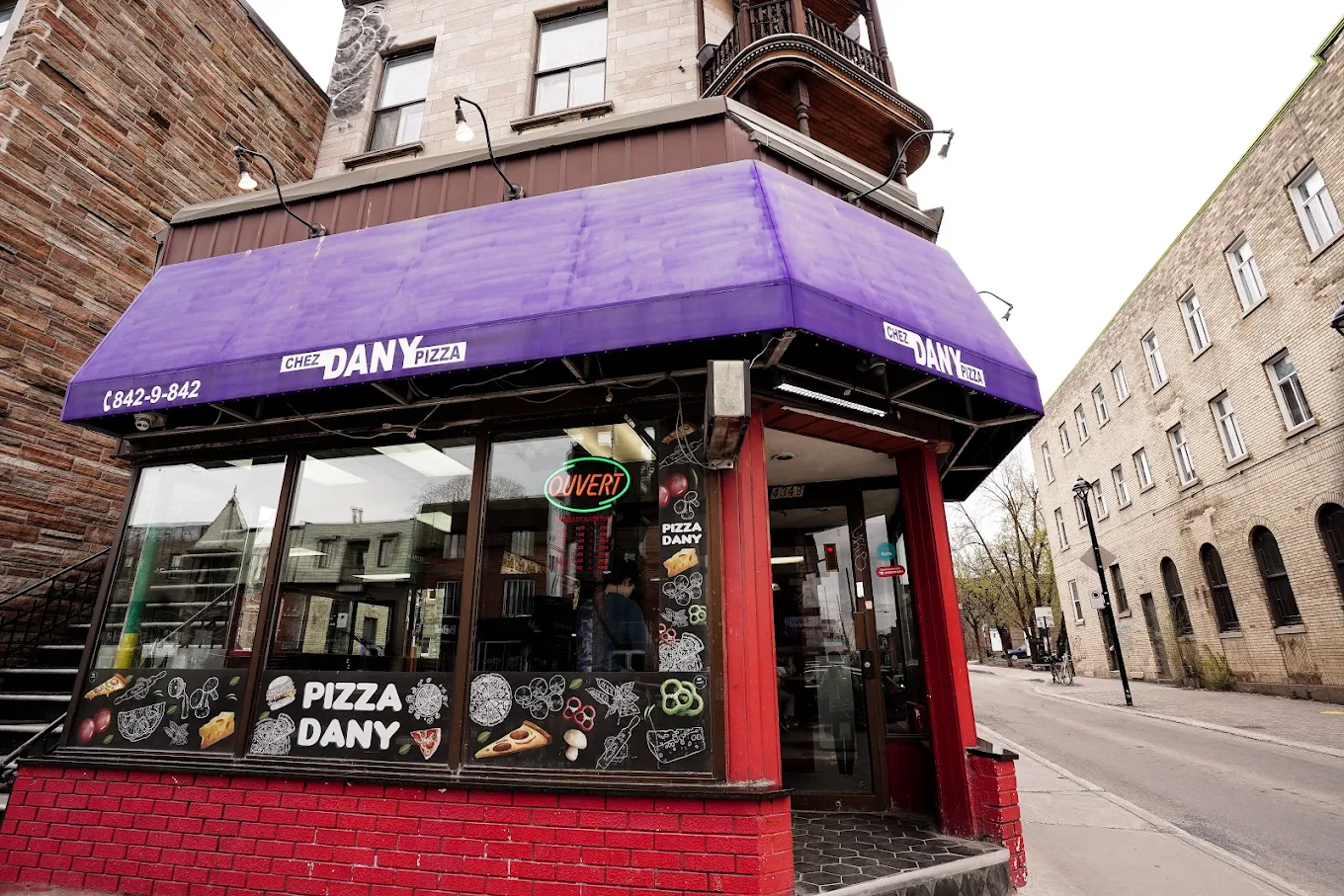
The Hidden Impact of Your Pizza Choices on Montreal’s Communities
Every time hunger strikes and you reach for your phone to order dinner, you’re making a choice that extends far beyond satisfying your appetite. The decision between calling a local pizza Montreal establishment or ordering from a national chain creates ripples throughout your community—affecting neighborhood character, local employment, economic vitality, and even the cultural fabric that makes Montreal unique. Yet most diners remain unaware of the profound differences these choices create.
In Montreal’s vibrant Plateau neighborhood and across the city, independent pizzerias represent more than just dining options—they’re community anchors, employment generators, cultural preservers, and economic engines that keep neighborhoods thriving. A restaurant local Plateau establishment reinvests in your community, sources from regional suppliers, and contributes to the distinctive character that makes Montreal one of North America’s most celebrated food cities.
This comprehensive exploration reveals the measurable differences between supporting local pizzerias versus chain restaurants, examines the economic and social impact of your dining dollars, showcases what makes Montreal’s independent pizza scene exceptional, and provides actionable strategies for finding and supporting the local establishments that deserve your business. You’ll discover why choosing local isn’t just about better pizza—it’s about investing in the community you call home.
The Economic Reality: Where Your Money Actually Goes
The Local Multiplier Effect Explained
When you spend $100 at a local pizza Montreal establishment, approximately $68 remains in the local economy through wages to local employees, purchases from regional suppliers, taxes to municipal government, and spending by the owner in neighborhood businesses. That same $100 spent at a national chain keeps only $43 locally—the remainder flows to distant corporate headquarters, national suppliers, and shareholders who have no connection to your community.
This phenomenon, documented extensively by economic research organizations like the American Independent Business Alliance, is called the local multiplier effect. Every dollar circulates through the local economy multiple times, creating what economists call “economic velocity.” A thriving independent business sector generates roughly 50% more economic activity per sales dollar than chain-dominated commercial districts.
Real Numbers for Montreal: Research specific to Quebec’s economy shows that independent restaurants generate 1.4 times more local economic impact than chain equivalents. For a neighborhood pizzeria generating $500,000 in annual revenue, that translates to approximately $340,000 staying local compared to $215,000 for a chain—a difference of $125,000 annually benefiting your community.
Employment Quality and Community Investment
Independent restaurant local Plateau establishments create meaningfully different employment compared to chains:
Local Restaurants:
- Average tenure: 3.2 years (showing career development opportunities)
- Management from within: 78% of managers started as hourly employees
- Benefits offered: 62% provide health benefits for full-time employees
- Scheduling flexibility: Higher accommodation for student schedules and family needs
- Skill development: Cross-training across multiple positions common
Chain Restaurants:
- Average tenure: 11 months (reflecting transactional employment relationship)
- Management from within: 34% of managers promoted internally
- Benefits offered: 31% provide health benefits, typically restricted to management
- Scheduling flexibility: Standardized scheduling systems with limited accommodation
- Skill development: Narrowly defined roles with minimal cross-training
Beyond employment statistics, local restaurant owners live in the communities they serve. They coach youth sports teams, sponsor local schools, participate in neighborhood associations, and patronize other local businesses. Their success directly benefits the community in visible, tangible ways that distant corporate profits cannot replicate.
Tax Revenue and Municipal Services
Property taxes, business taxes, and meal taxes from independent restaurants fund local services—schools, parks, infrastructure, public safety. While chains also pay these taxes, independent businesses typically generate higher assessed property values and create more vibrant commercial districts that attract additional tax-generating businesses.
Studies of commercial corridors show that districts with 60%+ independent businesses maintain 23% higher property values than chain-dominated areas, directly impacting municipal tax revenue and service quality.
Quality Differences: Why Local Pizza Tastes Better
Ingredient Sourcing and Freshness
Local pizza Montreal establishments prioritize ingredient quality differently than chains constrained by corporate supply contracts and profit margin requirements:
Independent Pizzerias:
- Source produce from local farms and Jean-Talon or Atwater markets when seasonal
- Purchase cheese from Quebec dairy producers and artisan cheesemakers
- Select flour based on quality rather than price, often importing Italian “00” flour
- Change suppliers if quality declines, maintaining flexibility
- Feature seasonal menu items showcasing peak-freshness ingredients
Chain Operations:
- Receive pre-portioned ingredients from centralized distribution centers
- Source based on national contracts prioritizing consistency and cost over peak quality
- Use standardized ingredients across all locations regardless of regional availability
- Follow corporate specifications with no local flexibility
- Maintain static menus unable to capitalize on seasonal opportunities
The difference is immediately apparent in taste. Tomatoes at peak summer ripeness from a local farm taste profoundly different from standardized tomatoes designed for year-round consistency. Quebec mozzarella from a small dairy producer has texture and flavor that pre-shredded, nationally distributed cheese cannot match.
Recipe Development and Culinary Creativity
Independent pizzerias create recipes reflecting the owner’s vision, culinary training, and response to community preferences. A restaurant local Plateau can experiment with combinations inspired by Montreal’s multicultural population, adjust recipes based on customer feedback, and innovate without corporate approval processes.
Chain restaurants follow corporate test kitchen recipes designed for reproducibility across hundreds of locations. While this ensures consistency, it eliminates creativity, regional adaptation, and the culinary passion that transforms good food into memorable experiences.
Real Example: A Plateau pizzeria might create a special featuring Quebec lamb, local chanterelle mushrooms, and aged cheddar from the Eastern Townships—a combination impossible within chain constraints. These creative offerings showcase regional ingredients while providing dining experiences unavailable elsewhere.
Preparation Techniques and Craftsmanship
Making exceptional pizza requires skill developed over years. Independent pizzerias employ pizzaiolos who view their work as craft, investing time in perfecting dough fermentation, hand-stretching technique, and precise baking.
Chains prioritize speed and consistency over craftsmanship. Dough arrives pre-made or follows quick-rise recipes. Employees receive minimal training focused on speed rather than quality. The business model rewards efficiency over excellence—a fundamental conflict with culinary craft.
Cultural and Social Impact: Building Community Through Food
Neighborhood Character and Identity
Walk through the Plateau, Mile End, or Rosemont, and independent restaurants define neighborhood character. Each establishment reflects its owner’s personality, cultural background, and culinary vision. The diversity of options creates vibrant, interesting streetscapes that attract residents and visitors.
Chain-dominated commercial corridors look identical everywhere—the same logos, same architecture, same experience whether you’re in Montreal, Toronto, or Phoenix. This homogenization erodes the distinctive character that makes neighborhoods desirable places to live, work, and visit.
Real Estate Impact: Properties in neighborhoods with thriving independent business districts command 15-20% premiums over similar properties in chain-dominated areas, according to urban planning research. Residents value neighborhood character and are willing to pay for it.
Cultural Preservation and Innovation
Montreal’s exceptional food culture—the reason the city attracts culinary tourism and international recognition—exists because of independent restaurants operated by passionate individuals. These establishments preserve cultural traditions (authentic Neapolitan pizza-making, for example) while innovating and adapting to create new traditions.
A local pizza Montreal scene that includes Neapolitan specialists, New York-style innovators, creative fusion concepts, and neighborhood favorites creates culinary diversity impossible in chain-dominated markets. This variety reflects Montreal’s multicultural identity and keeps the food scene dynamic and internationally relevant.
Community Gathering Spaces
Independent restaurants function as “third places”—neither home nor work—where community members connect. Owners recognize regular customers, remember preferences, ask about families, and create welcoming environments that foster social connection.
Chain restaurants, optimized for transaction efficiency and turnover, rarely develop the same community role. Employees rotate frequently, managers follow corporate protocols, and the environment prioritizes speed over lingering.
Social Capital: Communities with strong independent business sectors report higher levels of social trust, civic participation, and community satisfaction—factors that improve quality of life beyond mere economic measures.
Environmental Considerations: Local Means Sustainable
Reduced Transportation Impact
Ingredients traveling from local farms or regional suppliers to restaurant local Plateau establishments generate significantly less environmental impact than items shipped thousands of miles through national distribution networks.
A Quebec cheese producer delivering to Montreal pizzerias travels 50-150 kilometers. The same cheese in a chain’s supply network might travel from Wisconsin (1,500 km) to a distribution center in Ontario (500 km) before finally reaching Montreal (250 km)—a total of 2,250 kilometers generating unnecessary carbon emissions.
Multiplied across all ingredients and all deliveries, the environmental impact difference becomes substantial. Supporting local restaurants means supporting shorter supply chains and reduced transportation emissions.
Food Waste Reduction
Independent pizzerias ordering based on actual local demand generate less waste than chains receiving standardized shipments regardless of location-specific needs. Local establishments can adjust orders in real-time, feature specials to use surplus ingredients, and respond flexibly to demand fluctuations.
Chains’ centralized distribution creates structural waste—ingredients arriving based on corporate projections rather than actual local needs, inability to adjust quickly when forecasts prove inaccurate, and disposal of items that don’t meet standardized freshness requirements despite remaining perfectly edible.
Packaging and Single-Use Materials
While both independent and chain pizzerias use delivery packaging, local establishments increasingly adopt compostable or recyclable materials in response to customer values. Many Montreal pizzerias now use biodegradable boxes, compostable utensils, and minimal plastic packaging.
Chains’ national scale means packaging decisions happen at corporate levels, typically prioritizing cost and logistics over environmental impact. Changes require system-wide coordination, slowing adoption of sustainable alternatives.
Expert Perspectives: What Industry Leaders Say
Dominique Laflamme, President of the Quebec Restaurant Association: “Independent restaurants are the backbone of Quebec’s exceptional food culture. They provide 68% of restaurant industry employment in the province while generating 72% of the culinary innovation that defines our regional identity. When consumers choose local, they’re not just getting better food—they’re investing in the employment, innovation, and cultural vitality that makes Quebec globally recognized for culinary excellence.”
Dr. Michel Tremblay, Economist specializing in local economic development: “The multiplier effect of supporting independent businesses cannot be overstated. My research across Quebec municipalities consistently shows that neighborhoods with thriving local business sectors maintain higher employment rates, better wage growth, increased property values, and stronger tax bases funding public services. The correlation is clear and measurable: communities that support local businesses thrive economically, while those dominated by chains struggle with economic stagnation and declining community vitality.”
Sophie Chen, Urban Planning Professor, McGill University: “From a city planning perspective, independent restaurants create walkable, vibrant neighborhoods that reduce car dependence and improve quality of life. Chain-dominated commercial districts designed around parking lots and drive-throughs encourage automobile use, increase emissions, and create less desirable living environments. Supporting local restaurants isn’t just about food—it’s about creating sustainable, livable cities.”
Actionable Strategies: How to Find and Support Local Pizzerias
Identifying Truly Local Establishments
Not all independently operated restaurants are truly local. Some are franchises of national chains, while others are locally owned but operate multiple locations with corporate-style management. Here’s how to identify genuine local pizza Montreal establishments:
True Local Indicators:
- Single location or small family business with 2-3 locations
- Owner actively involved in daily operations
- Unique menu items not available elsewhere
- Relationships with local suppliers (often mentioned on menus or websites)
- Participation in neighborhood events and community organizations
- Staff who have worked there for years
- Seasonal menu changes reflecting local ingredient availability
Red Flags:
- Identical menus across multiple distant locations
- Corporate website with franchise information
- Standardized interior design matching other locations
- No information about ownership or ingredient sourcing
- Frequently rotating staff suggesting transactional employment
Making Local Your Default Choice
Create a Personal Favorites List: Identify 3-5 local pizzerias in your area and rotate between them. Becoming a regular customer strengthens your relationship with these businesses and helps them predict demand.
Use Local-First Ordering Apps: Some delivery platforms now highlight independent restaurants. Filter search results to prioritize local establishments over chains.
Order Directly When Possible: Third-party delivery apps charge restaurants 20-30% commissions. Ordering directly by phone or through the restaurant’s own website keeps more money in their hands. Many offer pickup discounts as additional savings.
Spread the Word: Review local restaurants on Google, Yelp, and social media. Word-of-mouth and positive online reviews disproportionately impact independent businesses that can’t afford major advertising campaigns.
Gift Local: Purchase gift certificates from neighborhood pizzerias for birthdays, holidays, or thank-you gifts. This introduces others to local establishments while providing immediate cash flow to small businesses.
Understanding Price Differences
Independent restaurant local Plateau establishments sometimes charge slightly more than chains—typically $2-4 per pizza. This reflects:
- Higher-quality ingredients (real mozzarella vs. processed cheese product)
- Longer preparation time (properly fermented dough vs. quick-rise)
- Fair wages and benefits for employees
- Investment in proper equipment (wood-fired ovens, commercial mixers)
- Sustainable ingredient sourcing
The value proposition shifts from “cheapest available option” to “best quality and community impact per dollar.” Most consumers who make this mental shift find the modest premium entirely justified by improved taste and community benefits.
Special Occasions and Catering
Local pizzerias excel at catering and special event orders. Their flexibility allows customization impossible with chains’ standardized operations. For parties, family gatherings, office events, or celebrations:
- Call directly to discuss specific needs
- Ask about custom topping combinations
- Inquire about party packages and volume discounts
- Request delivery timing that matches your event schedule
- Build relationships that lead to preferred treatment over time
Many local establishments offer better per-unit pricing for large orders than chains, while delivering superior quality and personalized service.
Addressing Common Concerns About Choosing Local
“Chain Restaurants Offer Consistency—I Know What I’m Getting”
This perceived advantage actually represents limitation. Chains offer predictable mediocrity—the same adequate pizza regardless of location. Independent restaurants offer quality variation that trends upward as passionate owners continuously improve.
Yes, trying a new local pizza Montreal establishment involves minor risk—you might not love it. But the potential upside is discovering a favorite that becomes part of your personal food story. The handful of chains offer limited ceiling on quality; the dozens of local pizzerias offer endless discovery opportunities.
“Chains Are More Convenient—Better Technology and Faster Delivery”
While major chains invest heavily in ordering technology, many local restaurants now offer competitive online ordering, delivery tracking, and mobile apps. The convenience gap has narrowed significantly.
Moreover, local restaurants often provide superior actual service—they’re motivated to please individual customers rather than process orders efficiently. A local pizzeria might accommodate special requests, adjust orders for errors, or provide extras that chain employees following corporate protocols cannot.
“I’m Just One Person—My Choices Don’t Matter”
This mindset ensures nothing changes. Individual choices aggregate into collective impact. If 100 Montreal families shifted just one weekly pizza order from chains to local restaurants, that represents $3,000-4,000 weekly—$156,000-208,000 annually—flowing to local businesses instead of distant corporations.
Your individual choice matters because collective change begins with individual decisions. Every local order supports jobs, strengthens community, and improves neighborhood character in small but meaningful ways.
“Local Restaurants Don’t Offer Deals Like Chains”
While chains advertise heavily promoted deals, local restaurants often provide equivalent or better value through:
- Loyalty programs rewarding regular customers
- Daily or weekly specials not advertised broadly
- Quantity discounts for large orders
- Free items (garlic bread, drinks) with purchase thresholds
- Pickup discounts
Build relationships by becoming a regular, and many local restaurants will offer preferential treatment unavailable to new customers—essentially creating personal deals matching or exceeding chain promotions.
Professional Support for Community-Focused Dining
While these strategies can be implemented independently as you explore Montreal’s diverse pizza landscape, those seeking exceptional quality combined with strong community values may benefit from establishments that prioritize both. At Chez Dany Pizza, we’ve built our business on community investment—sourcing ingredients from Quebec producers whenever possible, maintaining relationships with local suppliers, employing neighborhood residents, and participating actively in Plateau community life. We believe great pizza and community impact are inseparable. Our commitment to quality means using premium ingredients, proper fermentation techniques, and skilled preparation while ensuring fair wages and positive working conditions for our team. Visit our homepage to explore our menu crafted with local ingredients, or contact us to discuss catering options that support community values while delivering exceptional taste. When you choose Chez Dany Pizza, you’re not just ordering dinner—you’re investing in your neighborhood’s vitality.
Conclusion: Every Order Is a Vote for the Community You Want
The choice between local pizza Montreal establishments and national chains represents a profound decision about community values. Each time you order, you’re voting—for the type of neighborhood you want to live in, the quality of food you believe people deserve, the employment conditions you think are acceptable, and the kind of economy you want to participate in.
Independent pizzerias create vibrant neighborhoods, preserve cultural traditions, generate quality employment, support regional suppliers, reduce environmental impact, and contribute to the distinctive character that makes Montreal internationally celebrated. These benefits extend far beyond individual transactions—they compound over time, creating communities where people genuinely want to live, work, and raise families.
The difference between adequate chain pizza and exceptional local pizza is minimal in immediate satisfaction—both address hunger. The difference in long-term community impact is profound and permanent. Neighborhoods that support local businesses thrive; those that don’t, struggle. The choice is clear, the impact is measurable, and the time to act is now.
Ready to make dining choices that align with your community values? Discover the restaurant local Plateau establishments that deserve your support. Start with Chez Dany Pizza, where exceptional quality meets unwavering community commitment. Order online to experience the difference locally-focused pizzerias deliver, or visit us in person to become part of a community that believes great food and strong neighborhoods are inseparable. Your pizza choices matter—make them count.
Frequently Asked Questions
Q: How can I verify that a restaurant is actually local and not a franchise?
Research ownership through the restaurant’s website—genuine local establishments typically feature owner bios and origin stories. Check business registration databases available through Quebec’s Registraire des entreprises. Look for signs of community integration: participation in neighborhood events, sponsorship of local sports teams, relationships with local suppliers mentioned on menus. Visit the restaurant and observe whether owners are present and active in operations. Franchises typically have corporate websites with franchise information, standardized menus across locations, and minimal local customization. When in doubt, simply ask staff about ownership—local restaurants are proud of their independence and happy to discuss it.
Q: Are local restaurants really better quality, or is that just marketing?
Quality differences are objectively measurable. Independent restaurants source ingredients based on quality rather than corporate contracts, allowing flexibility to choose premium options. They employ preparation techniques (like 48-72 hour dough fermentation) that chain timelines don’t permit. Recipe development responds to local preferences rather than national standardization. Employee tenure averages three times longer at independent restaurants, meaning more experienced staff preparing your food. The proof is in tasting—most people who conduct blind taste tests strongly prefer independent restaurant food over chain equivalents. The quality difference reflects different business priorities: local restaurants succeed through excellence, while chains succeed through efficiency and marketing scale.
Q: If local restaurants are so much better, why do chains remain popular?
Chains succeed through massive marketing budgets, convenient technology investment, brand familiarity, and strategic location selection. They’re designed for convenience and predictability rather than excellence. Many consumers aren’t aware of the quality and community impact differences between local and chain options—they default to familiar brands without considering alternatives. Additionally, chains optimize for low prices through industrial-scale operations and ingredient standardization, appealing to price-sensitive consumers. However, awareness is growing—independent restaurants’ market share in Quebec has increased from 64% to 68% over the past five years as consumers become more educated about quality and community impact differences.
Q: How much more expensive are local restaurants compared to chains?
Price differences are typically modest—$2-4 per pizza on average, representing roughly 15-20% premium. However, this comparison isn’t entirely fair because you’re receiving meaningfully higher quality. When comparing equivalent quality (premium ingredients, proper preparation), local restaurants often cost the same or less than chains’ “premium” offerings. Many local establishments offer deals, loyalty programs, or quantity discounts that narrow or eliminate price gaps. The better question isn’t “How much more does local cost?” but rather “What am I receiving for my money?”—and on that measure, local restaurants deliver significantly more value per dollar through better ingredients, skilled preparation, and community investment.
Q: Can supporting local restaurants really make a measurable difference to my community?
Yes, and the data is clear. Economic studies consistently show the local multiplier effect—money spent at independent businesses circulates through local economies roughly 50% more effectively than chain spending. Neighborhoods with thriving independent business sectors maintain higher property values, lower unemployment, better municipal services (funded by stronger tax bases), and greater resident satisfaction. If just 10% of a neighborhood’s restaurant spending shifted from chains to local establishments, the community would retain approximately $300,000-500,000 additional dollars annually (depending on neighborhood size)—money that funds local jobs, supports regional suppliers, and improves community vitality in visible, measurable ways. Individual choices aggregate into collective transformation.


Leave a Reply